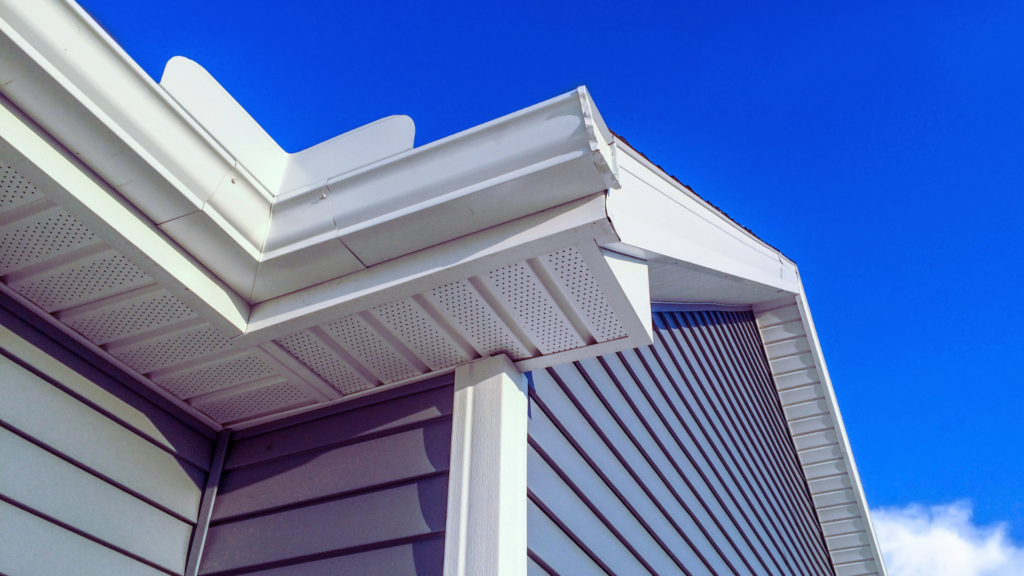
What is a soffit vent? It’s a ventilation opening installed in the underside of your roof’s overhang, called the soffit, that allows fresh outside air to flow into your attic. Most homeowners never think about soffit vents until they’re dealing with sky-high energy bills, ice dams in winter, or a roofing contractor telling them their attic is improperly ventilated. Understanding how soffit vents work, why they matter, and when they fail can save you thousands in preventable roof and structural damage. This guide covers everything you need to know.
What is a Soffit Vent? (The Simple Definition)
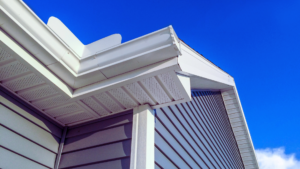
A soffit vent is an intake ventilation component located in the soffit, the finished underside of a roof’s eave or overhang. It works as the entry point in a passive ventilation system: cool outside air enters through the soffit vents at the bottom, rises through the attic, and exits through ridge or roof vents at the top.
Think of it like a chimney effect for your attic. Without proper intake at the soffit level, exhaust vents at the roof peak have nothing to pull air from, and the entire ventilation system breaks down.
Soffit Vent vs. Other Roof Vents: Quick Comparison
| Vent Type | Location | Function | Air Flow Direction |
|---|---|---|---|
| Soffit vent | Eave/overhang underside | Intake | Pulls cool air IN |
| Ridge vent | Peak of the roof | Exhaust | Pushes hot air OUT |
| Gable vent | Side wall of the attic | Intake or exhaust | Cross-ventilation |
| Roof louver | Roof surface | Exhaust | Pushes hot air OUT |
| Power vent | Roof surface | Forced exhaust | Motorized air removal |
Soffit vents are always intake — they work in partnership with exhaust vents higher up on the roof to create continuous airflow.
Why Soffit Vents Matter (The Real Cost Breakdown)
The Price of Poor Attic Ventilation
| Ventilation Problem | Repair Cost | Root Cause |
|---|---|---|
| Mold remediation (attic) | $1,500–$4,000 | Trapped moisture from no intake airflow |
| Ice dam removal + repair | $1,000–$3,500 | Heat buildup from poor ventilation |
| Premature shingle failure | $7,000–$15,000 | Excess attic heat degrades shingles from below |
| Roof deck rot replacement | $2,500–$8,000 | Chronic moisture with no airflow |
| Insulation replacement | $2,000–$5,000 | Moisture saturation from condensation |
Each of these problems shares a common root: inadequate intake ventilation. A properly installed soffit vent system — costing as little as $300–$600 installed — can prevent every one of them.
The Ventilation Ratio Rule
Building codes generally require 1 square foot of net free ventilation area (NFVA) for every 150 square feet of attic floor space. When balanced 50/50 between intake (soffit) and exhaust (ridge), this ratio drops to 1 per 300 sq ft per vent type. Falling short of this ratio accelerates moisture damage and heat buildup.
Types of Soffit Vents: Know Your Options First
Different homes use different soffit vent styles, and identifying which type you have is the first step in assessing whether your ventilation is adequate. Continuous soffit vents run the full length of the eave as a single perforated or slotted strip. They provide the most consistent airflow and are the preferred choice for new construction and full re-roofing projects.
Individual or round soffit vents are circular or rectangular plug-in units installed at intervals along the soffit. They’re common on older homes and are easier to add as retrofit upgrades without replacing the entire soffit panel. Perforated soffit panels serve double duty as both the finished soffit surface and the vent — the entire panel is dotted with tiny holes that allow airflow.
These are standard on vinyl and aluminum soffits. Baffled soffit vents include a built-in deflector that directs incoming air upward into the attic while blocking rain, insects, and debris. They’re especially valuable in high-wind or high-rain climates.
Hidden or narrow soffit vents are slim-profile options designed for homes with minimal overhang where standard vents won’t fit. They deliver reduced airflow but are better than no intake ventilation at all.
Warning Signs Your Soffit Vents Are Failing (Inspection Guide)
Exterior Warning Signs
Blocked or painted-over soffit vents are a high-severity issue requiring immediate attention — even a single coat of paint across perforated panels can reduce airflow by 30–50%. Crushed or damaged vents from ladder contact or pest nesting restrict intake and create gaps for moisture and animals. Sagging or discolored soffit panels directly below the vent may indicate water is backing up from ice dams or gutter overflow. Missing vent screens allow birds, bats, and insects to nest inside the soffit cavity and block airflow entirely.
Interior / Attic Warning Signs
In the attic, check for dark staining or streaking on the underside of the roof sheathing near the eaves — this signals condensation from stagnant air. Frost on the underside of the roof deck in winter is another clear indicator that warm, moist attic air is not being displaced.
Insulation pushed against the eaves can block the airflow channel between the soffit vent and the attic space — a baffle or rafter vent should always be installed to keep this pathway open. Musty or stale odors in the attic during warmer months point to inadequate air exchange.
Even your energy bills tell a story: if cooling costs spike in summer, your attic may be trapping heat that a functioning soffit vent system would otherwise expel.
How Soffit Vents Work with the Rest of Your Roof System
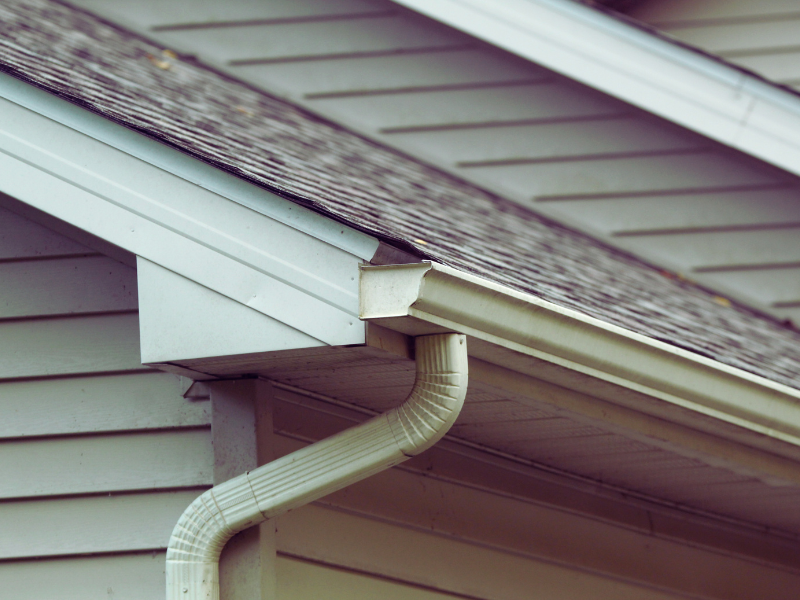
Soffit vents don’t work in isolation — they’re one half of a balanced ventilation system. Cool outside air enters the soffit vents at the eave level, travels up through channels between the rafters (kept open by baffles or rafter vents), fills the attic space, and exits through ridge vents or roof louvers at or near the peak. This continuous airflow does three critical things simultaneously.
In summer, it removes superheated attic air that can reach 150°F or more — temperatures that accelerate shingle degradation from the underside and dramatically increase cooling loads on your HVAC system. In winter, it keeps the attic cold and matches the temperature of the exterior roof surface, preventing the freeze-thaw cycle that forms ice dams along the eaves. Year-round, it removes moisture-laden air before condensation forms on the roof deck and insulation, preventing rot, mold, and structural damage.
Soffit Vent Age and Performance Benchmarks
The performance of your soffit vents changes over time, and knowing what to expect at each stage helps you stay ahead of problems.
Vents 0–5 years old are prone to installation issues: baffles may have been omitted, insulation may already be blocking the intake channel, or screens may not have been secured properly. Between 5 and 10 years, paint-over from exterior repaints is a common issue, and screening can begin to corrode or collapse in humid climates. At the 10–15 year mark, vinyl and aluminum soffit panels can warp or crack, reducing the effectiveness of perforated vent panels.
After 15–20 years, pest infiltration through deteriorated screens and physical damage from maintenance work is increasingly common. Homes past 20 years may have had multiple layers of insulation added over the years — each layer potentially compressing closer to the eaves and blocking intake airflow.
How to Calculate How Many Soffit Vents You Need
Getting the right number of soffit vents starts with your attic’s square footage and the 1:150 ventilation ratio required by most building codes.
Step 1 – Measure your attic floor area. For a 2,400 sq ft attic, you need a minimum of 16 sq ft of total net free ventilation area (NFVA).
Step 2 – Split it 50/50. Half of that — 8 sq ft — should come from intake (soffit) vents, and half from exhaust (ridge or roof) vents.
Step 3 – Check your vent’s NFVA rating. Each vent has a rated NFVA stamped on the packaging. A standard round soffit vent typically provides 50–65 sq in of NFVA. Convert your requirement to square inches (8 sq ft × 144 = 1,152 sq in needed).
Step 4 – Divide to find the quantity. 1,152 ÷ 65 = approximately 18 standard round soffit vents needed for intake.Soffit Vent Quantity Reference Chart
| Attic Size | Total NFVA Needed | Intake NFVA (50%) | Standard Round Vents Needed |
|---|---|---|---|
| 1,000 sq ft | 6.7 sq ft | 3.3 sq ft | ~8 vents |
| 1,500 sq ft | 10 sq ft | 5 sq ft | ~11 vents |
| 2,000 sq ft | 13.3 sq ft | 6.7 sq ft | ~15 vents |
| 2,500 sq ft | 16.7 sq ft | 8.3 sq ft | ~18 vents |
| 3,000 sq ft | 20 sq ft | 10 sq ft | ~22 vents |
Technology Tools Homeowners Can Use
Modern tools make it easier to assess soffit vent performance without hiring a specialist. Thermal imaging cameras — increasingly available as smartphone attachments — can reveal hot spots in your attic caused by poor intake ventilation, often before any visible damage appears. Attic ventilation calculators available on most roofing manufacturer websites let you input attic dimensions and get an instant intake vent recommendation.
Moisture meters are inexpensive, handheld devices that let you test attic insulation and sheathing for moisture levels above safe thresholds. Infrared thermometers can measure temperature differentials between your attic space and the outside air — a gap of more than 10–15°F on a mild day signals inadequate ventilation. Drone inspection services are increasingly used to photograph soffit conditions on two-story homes without ladder access, helping document blocked or damaged vents along the full eave line.
DIY Inspection vs. Professional Installation: Know the Difference
Homeowners can safely inspect ground-accessible soffits for paint-over, visible blockages, damaged screens, and missing vents. Attic inspections for staining, frost, or moisture are also safe DIY territory with a flashlight and basic safety precautions. However, cutting new vent openings into existing soffits, installing baffles between rafters, and calculating whole-house ventilation requirements should always be handled by a licensed roofing or ventilation professional.
Soffit vents should be inspected at least once a year — ideally in late fall before winter and again in spring after ice and snow season. After any re-roofing or exterior paint project, verify that vents have not been inadvertently covered or blocked.
If your attic has been re-insulated recently, confirm with your contractor that baffles were installed to protect the intake airflow channel at the eaves. For red flags like active mold growth, persistent moisture, or visible frost on the roof deck, schedule a professional attic ventilation assessment immediately.
Final Thoughts
A soffit vent is a small component with an outsized impact on your roof’s lifespan and your home’s energy efficiency. A 30-minute inspection of your soffit vents and attic intake channel once a year costs nothing but can catch blockages, paint-overs, or damaged screens before they quietly allow heat and moisture to destroy your roof deck, insulation, and shingles from the inside out. Proper ventilation isn’t optional — it’s the foundation of a roof that lasts.
FAQs
1. What is a soffit vent, and what does it do?
A: A soffit vent is an intake ventilation opening on the underside of your roof’s eave. It draws cool outside air into the attic to create continuous airflow that removes heat and moisture.
2. How do I know if my soffit vents are blocked?
A: Check for painted-over panels, collapsed screens, or insulation pushed against the eave from inside the attic. In winter, frost on the roof deck is a strong indicator of blocked intake vents.
3. Can I install soffit vents myself?
A: Basic inspection and screen replacement are safe DIY tasks. Cutting new vent openings or installing attic baffles should be done by a licensed contractor to avoid structural or ventilation errors.
Q: How many soffit vents does my home need?
A: Use the 1:150 rule — 1 sq ft of net free vent area per 150 sq ft of attic space, split 50/50 between intake and exhaust. A 2,000 sq ft attic typically needs about 15 standard round soffit vents for intake.
Q: Do soffit vents let cold air in during winter?
A: Yes — and that’s intentional. Keeping the attic cold in winter prevents ice dams from forming along the eaves by matching interior roof temperature to the cold exterior surface.