Crack. Ping. Boom.
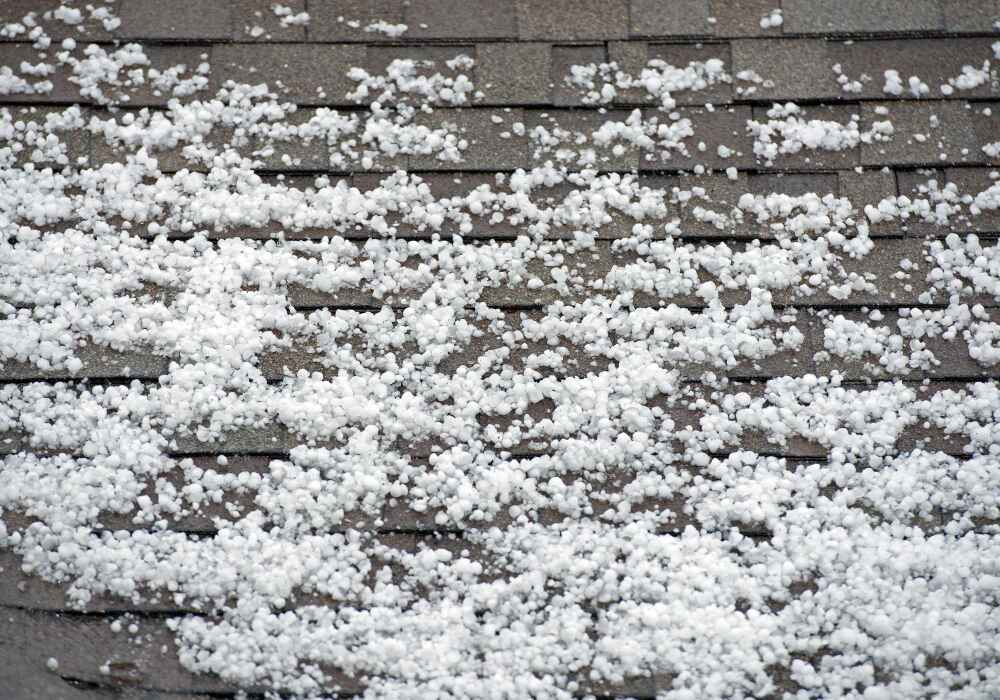
The sky opens, the hail comes crashing down and just like that, you’re left with a hail damage roof, taking the brunt of nature’s wildest storm.
After the storm clears, the sun peeks out, and you step outside to assess the aftermath. Your siding? Fine. Your car? Maybe a few dings. But your roof?
That’s where things get tricky.
Hail damage to a roof isn’t always obvious. In fact, many homeowners only discover problems weeks (or even months) later when a tiny leak turns into a major headache.
In this blog post, we’ll show you:
- How hail actually damages a roof
- What size hail can cause serious issues
- The key signs of damage (even if your shingles look okay)
- How to inspect your roof like a pro
- What to do next (especially if you’re thinking “Insurance?”)
Let’s dive in and help you stay ahead of costly repairs and unexpected drips. Read our most common roof repair issues blog.
How Does Hail Damage a Roof?
You might assume only softball-sized hail can hurt your home, but in reality, much smaller stones can wreak havoc depending on several factors.
Here’s how hail causes damage:
- Impact Force: Hailstones can strike shingles hard enough to bruise or crack them.
- Granule Loss: Shingles are coated with granules that protect the asphalt underneath. Hail knocks these loose.
- Cracking and Splitting: Especially on older or brittle shingles, hail can create cracks that let water in.
- Weakened Seal Tabs: Even if you don’t lose shingles immediately, loosened adhesive can cause them to fly off in the next storm.
Fun Fact: A single hailstorm can reduce your roof’s life expectancy by 5–10 years even if you don’t see immediate damage.
What Size Hail Damages Roofs?
Not all hail is created equal. The bigger it is, the more likely it is to cause problems but even small stones can do damage under the right conditions. Not sure how dangerous hail can be in your area? The National Weather Service Hail Guide breaks down how hail forms, how big it gets, and when to worry.
Hail Size Damage Chart:
Hail Size | Description | Likelihood of Roof Damage |
0.25″ (pea-sized) | Mostly harmless | Low |
1.0″ (quarter-sized) | May cause bruising on older shingles | Moderate |
1.5–2″ (golf ball–size) | Can crack shingles, dent vents | High |
2.5″+ (baseball-size) | Severe damage to all roof types | Very High |
Other Factors That Affect Damage:
- Wind speed and direction
- Roof age and material
- Roof pitch (flatter roofs get hit harder)
- Hailstone hardness (some are icy missiles)
Internal Tip: Considering a roof upgrade? Check out our Malarkey Shingles Review to learn about hail-resistant options.
What Does Hail Damage Look Like on a Roof?
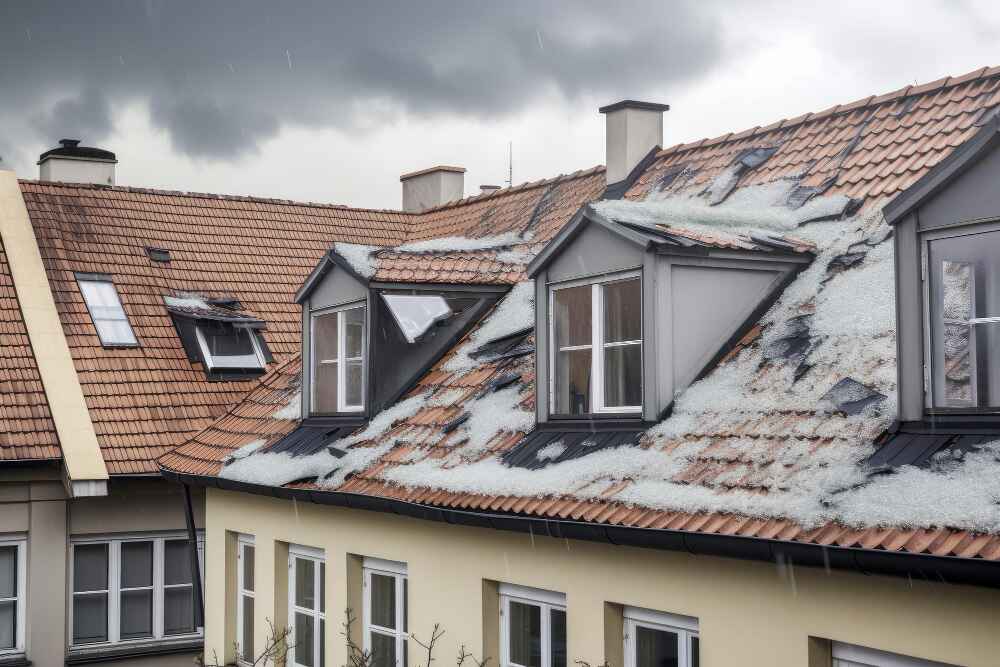
Hail damage doesn’t always look like giant holes or missing shingles. Often, it’s sneaky.
Signs of Hail Damage to Asphalt Shingles:
- Bruising: Press on a spot and feel a soft dent, like an apple with a bruise.
- Granule Loss: Exposed black asphalt, especially in circular spots.
- Cracks: Shingles may look fine but have hairline fractures.
- Edges Lifted: Especially on three-tab shingles after hail hits the seal strip.
Other Materials:
- Metal Roofs: Look for small dents they’re usually visible but hard to feel.
- Wood Shakes: Splits or fractures, especially along the grain.
- Tile/Slate: Cracked or broken pieces are more obvious but no less dangerous.
Pro Tip: Damage is often random and spread out, but usually concentrated on one side of the roof wherever the wind pushed the hail hardest.
How to Spot Roof Hail Damage From the Ground (And When to Climb)
You can spot hail damage without getting on your roof and in most cases, you probably should stay grounded (unless you’re experienced or extremely confident).
Signs You Can See Without Climbing:
- Dents in gutters or downspouts
- Dings on your mailbox, AC unit, or car
- Shingle granules in your downspout or gutter runoff
- Torn window screens
If these are present, your roof may have taken some hits too.
When to Get on the Roof (Or Call a Pro):
- After a major storm with golf ball–sized hail
- When you see daylight in the attic
- If you’re preparing to file a roof insurance claim
Internal Link: Learn how to file a claim with our Roof Damage Insurance Claim Process Guide.
Minor Hail Damage Roof – Still Worth Worrying About?
Short answer? Yes.
Even small hail damage can lead to:
- Slow leaks that cause mold or rot
- Insulation breakdown
- Energy inefficiency
- Roof warranty voids
How to Identify Roof Hail Damage Like a Pro
DIY Inspection Tips:
- Look for uniformity: If one slope is worse than the others, hail might be the cause.
- Press gently on shingles: Feeling for “soft spots” is better than just looking.
- Use chalk on vents or metal flashing: It helps make dents visible.
- Document everything you’ll want photos from multiple angles if you file a claim.
What Professionals Look For:
- Repetitive impact patterns
- Exposed matting
- Flashing and ventilation system damage
- Moisture beneath surface layers using infrared or moisture meters
Pro Move: Have a roofing contractor inspect it before the insurance adjuster. It gives you leverage. Read Professional guidelines for hail damage inspection.
Why Is Hail Damage Bad for a Roof?
Let’s break this down:
- Moisture Intrusion: Tiny cracks become big leaks after enough rain or snow.
- Accelerated Aging: Damaged shingles lose their protective granules, meaning your roof deteriorates faster.
- Compromised Protection: A single weakened shingle can fail during the next windstorm.
- Cost Creep: Today’s “minor” damage can turn into tomorrow’s “full roof replacement.”
Choosing the Right Hail Damage Roofers
The aftermath of a storm brings out the roofing cowboys out-of-town crews chasing insurance payouts.
What to Look For:
- Local presence and physical address
- Certified, insured, and bonded
- Great online reviews and Better Business Bureau rating
- Warranty on work performed
- Willingness to help with insurance claims
Avoid These Red Flags:
- High-pressure sales tactics
- Demands for full payment upfront
- No written estimate
- No license or proof of insurance
Final Thoughts: Hail Happens Don’t Ignore It
Protecting your home starts with recognizing that hail damage is often invisible from the ground. While your shingles may appear intact after a storm, high-impact hailstones can compromise the underlying structure, leading to accelerated granule loss and weakened seals that eventually invite leaks. Taking immediate action by documenting visible dents and scheduling a professional inspection is the most effective way to safeguard your investment.
By being proactive, you not only prevent long-term structural rot but also position yourself to maximize insurance benefits, potentially securing a necessary repair or full replacement before a minor issue turns into a costly emergency.
FAQs
1. Why is my roof leaking in only one spot?
Isolated leaks often stem from cracked flashing, vent boot failure, or ice dams. Because water travels along rafters, the entry point is frequently several feet away from where you see the drip.
2. What should I do first when I notice a leak?
Immediately contain the water with buckets and turn off electricity if it’s near fixtures. Document the damage for insurance and check your attic for wet insulation to help trace the water’s path.
3. Why is my roof leaking if the shingles look okay?
The issue is likely hidden underneath. Common culprits include failed underlayment, nail pops, or poor attic ventilation causing condensation. Even if shingles look intact, seals around vents may have cracked.
4. Can a clogged gutter cause a localized roof leak?
Yes. Gutter backups cause water to overflow and sneak under the edge of your roof or behind the fascia. This often results in a “one-spot” leak near the exterior walls or soffits of your home.
5. When should I call a pro for a localized leak?
If the leak is recurring, involves chimney flashing, or requires structural repair, call a pro. Improper DIY fixes can void your warranty and lead to expensive mold issues or structural rot later on.